
 BTC
BTC ETH
ETH USDT
USDT BNB
BNB SOL
SOL XRP
XRP USDC
USDC DOGE
DOGE ADA
ADA TRX
TRX
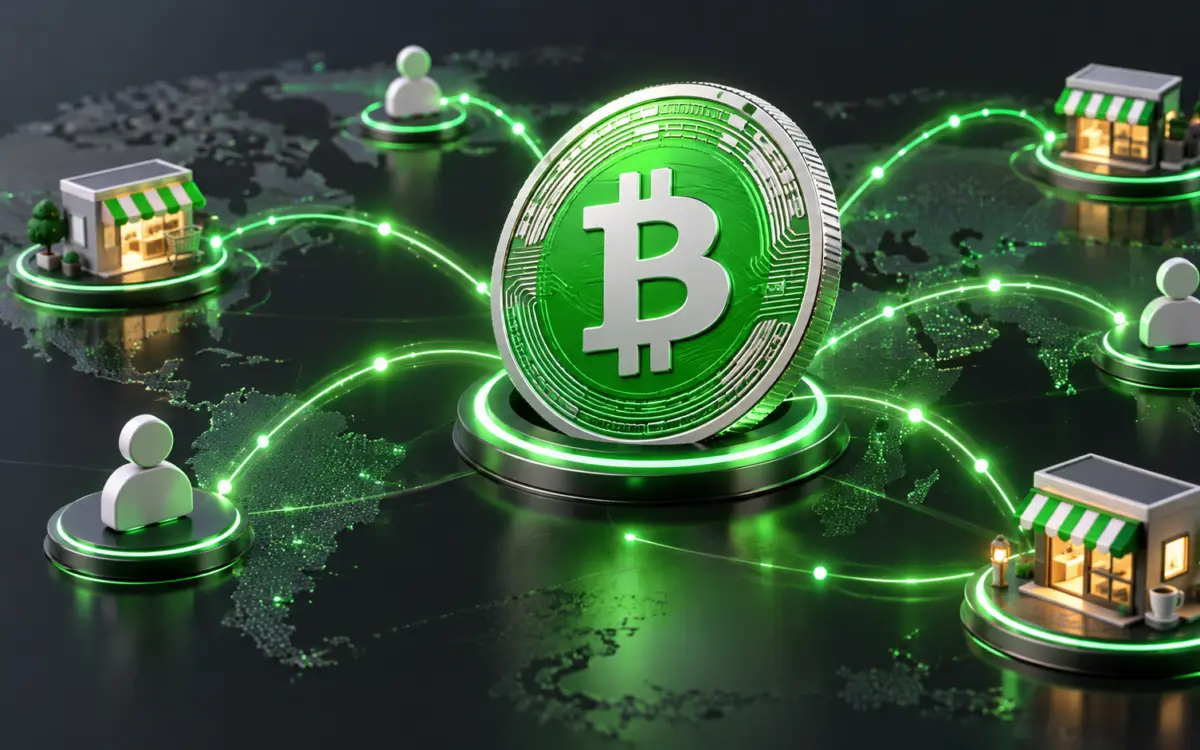
Bitcoin Cash (BCH) is a peer-to-peer cryptocurrency that emerged from a network split in 2017. It uses a proof-of-work blockchain and the BCH ticker. The project emphasizes direct digital payments, while the broader Bitcoin Cash network also supports application-layer features such as CashTokens.
How Bitcoin Cash works
When someone sends BCH, the transaction is broadcast to network nodes. Nodes check that it follows protocol rules, and miners compete to add valid transactions into a block using proof of work. As more blocks build on top, the transaction gains confirmations. A confirmation does not make a payment reversible; recipients should choose confirmation requirements based on their own risk and transaction context.
Bitcoin Cash uses the unspent transaction output (UTXO) model: coins are tracked as spendable outputs from earlier transactions. Its protocol documentation describes a target block interval of about ten minutes, so “fast” payment experience can depend on fees, wallet settings, network conditions, and whether a merchant accepts an unconfirmed transaction. A wallet may show a transfer as pending before a block includes it.
What can BCH be used for?
People may use BCH for peer-to-peer transfers, merchant payments, and other on-chain transactions where both sides support it. CashTokens add support for fungible and non-fungible tokens on the BCH network, but token activity requires compatible wallets and applications. Always verify the receiving address and asset type before sending funds.
Transaction fees are set in the context of network rules and wallet choices, and no crypto network can promise a particular fee or confirmation time for every transfer. Merchants can also set their own confirmation policy. For larger payments, check the recipient’s requirements and exchange or wallet status before sending.
Bitcoin Cash compared with Bitcoin and Ethereum
Bitcoin Cash and Bitcoin share historical roots and proof-of-work design elements, but they are separate networks with different transaction histories, software, and market behavior. Ethereum is a separate programmable blockchain with its own account model and smart-contract ecosystem. BCH, BTC, and ETH are not interchangeable; sending an asset to the wrong network can result in loss. Explore our guides to Bitcoin, Ethereum, blockchain, and cryptocurrency.
Bitcoin Cash risks
BCH can be volatile, and a payment’s fiat value may change quickly. Users also face wallet, custody, phishing, address, exchange, network, and regulatory risks. Proof of work does not eliminate software bugs or guarantee that every service will support BCH. Fees, confirmation times, and merchant acceptance can vary; avoid assuming that a transaction is final until the recipient’s policy is met.
Frequently asked questions
Is BCH the same as BTC?
No. Bitcoin Cash (BCH) and Bitcoin (BTC) are distinct crypto networks and assets. Check ticker and network carefully before deposits or withdrawals.
How long does a BCH transaction take?
Blocks are targeted roughly ten minutes apart, but the time for a payment to receive confirmations can vary with network and wallet conditions.
Are Bitcoin Cash payments risk-free?
No. Crypto transfers are generally difficult to reverse, and price, custody, and operational risks remain.
Before sending BCH
Use a wallet and network that explicitly support BCH, double-check the address and amount, and send a small test transfer when appropriate. Keep recovery phrases private and offline. See our guide to keeping cryptocurrency safe. For protocol details, read the Bitcoin Cash protocol documentation and CashTokens introduction.
Some payment processors and exchanges may apply additional checks, limits, or maintenance windows. Confirm the network is supported before a deposit or withdrawal. Copy addresses from the recipient’s wallet and verify them carefully to reduce avoidable mistakes.
This article is educational, not investment, legal, or tax advice. Crypto assets are volatile and transactions can lead to partial or total loss.




Comments