
 BTC
BTC ETH
ETH USDT
USDT BNB
BNB SOL
SOL XRP
XRP USDC
USDC DOGE
DOGE ADA
ADA TRX
TRX
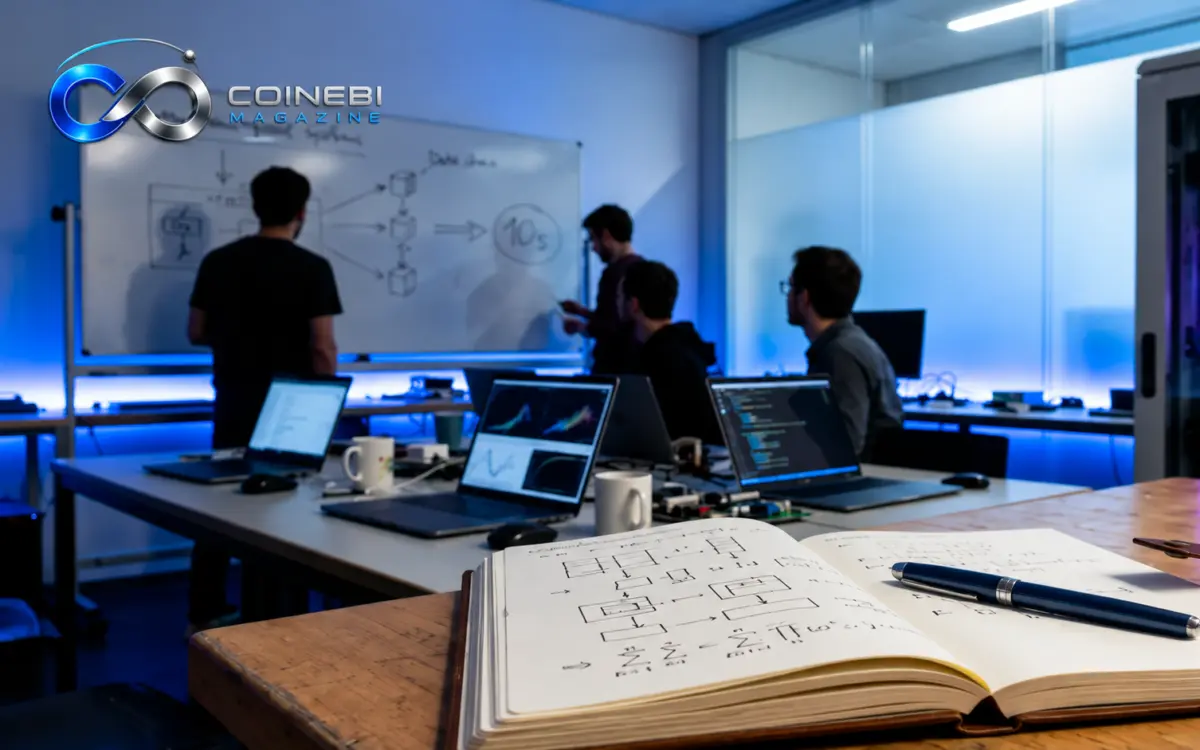
The race for scaling supremacy on Ethereum has reached a pivotal moment with the unveiling of a new zkSync prover technology designed to dramatically accelerate transaction processing speeds. As Layer-2 (L2) networks seek to differentiate themselves through speed, cost efficiency, and architecture, Matter Labs has introduced a powerful new cryptographic prover named Airbender Prime. This development comes at a critical juncture for the scaling landscape, where developers are navigating both institutional demands and existential architectural choices.
While some scaling protocols are doubling down on their alignment with the Ethereum base layer, others are questioning whether the current L2 paradigm is sufficient for their long-term visions. This divergence highlights a growing philosophical split among major zero-knowledge (ZK) rollup providers, which could reshape how decentralized applications and traditional financial institutions interact with public blockchains.
How zkSync Prover Technology Accelerates Block Processing
The core of Matter Labs’ latest technological milestone lies in its performance metrics, which show a substantial leap in cryptographic proving efficiency. According to the development team, the new zkSync prover technology successfully processed 99% of 7,200 consecutive Ethereum mainnet blocks in under 10 seconds each. This feat demonstrates that high-throughput, real-time zero-knowledge proving is becoming increasingly viable for mainstream applications.
What makes these performance statistics particularly notable is the hardware footprint required to achieve them. Rather than relying on massive, cost-prohibitive server farms or complex distributed computing clusters, the benchmarking was conducted on a single NVIDIA RTX PRO 6000 Blackwell GPU. By optimizing the proving software to leverage modern consumer-to-enterprise-grade hardware, the cost and barrier to entry for running a prover are significantly lowered, paving the way for more decentralized network operations.
This hardware efficiency addresses a long-standing criticism of ZK-rollups: the immense computational overhead required to generate validity proofs. Historically, generating these proofs took minutes or even hours, forcing a trade-off between absolute cryptographic security and immediate transaction finality. By squeezing proof times down to the single-digit second range on a single GPU, the gap between user experience and cryptographic rigor is rapidly closing.
Courting Institutional Players and Global Banks
The technical achievements of Airbender Prime are not just academic exercises; they are central to Matter Labs’ commercial strategy. By showcasing a prover that is both fast and hardware-efficient, zkSync is actively courting traditional financial institutions and global banks. For enterprise players, predictability, speed, and low infrastructure overhead are non-negotiable requirements when evaluating blockchain solutions.
Banks and institutional asset managers have shown growing interest in tokenized assets, but they require infrastructure that can match the performance of legacy financial networks. A prover capable of sub-10-second proof generation allows institutions to settle transactions with near-instant cryptographic finality, reducing counterparty risk and freeing up capital that would otherwise be locked up during long settlement windows. This positions the network as an attractive settlement layer for private or hybrid institutional ledgers looking to bridge into the broader Ethereum ecosystem.
Furthermore, the ability to run a high-performance prover on relatively accessible hardware like the NVIDIA RTX PRO 6000 Blackwell GPU means that compliance-minded institutions can run their own node infrastructure internally. This setup ensures they do not have to outsource critical cryptographic validation to third-party providers, satisfying strict regulatory mandates regarding data custody and operational control.
Starknet Weighs an Exit to Independent L1 Status
While zkSync is focusing on deepening its integration with Ethereum and attracting enterprise partners, its main rival in the ZK-rollup space, Starknet, is considering a vastly different path. Just five days prior to the Airbender Prime announcement, Starknet revealed that it is actively considering becoming an independent Layer-1 (L1) blockchain. This potential pivot highlights the strategic disagreements currently fracturing the L2 development community.
The primary motivation behind Starknet’s potential exit from the Ethereum L2 ecosystem is the pursuit of full quantum resistance. As quantum computing technology advances, existing cryptographic assumptions underpinning many public blockchains could become vulnerable. By transitionary to an independent L1 structure, Starknet’s developers believe they can build a foundational architecture optimized from the ground up for quantum security, free from the legacy constraints of Ethereum’s base layer design.
This potential migration underscores a broader challenge within the scaling ecosystem, where some projects feel constrained by Ethereum’s current roadmap and governance. If Starknet decides to pursue independent L1 status, it would represent a significant shift in the competitive landscape, transforming a major Ethereum scaling partner into a direct L1 competitor.
The Great Divergence in Ethereum Scaling
The contrast between the strategies of zkSync and Starknet reflects a larger trend of fragmentation in the scaling sector. For beginners trying to understand how the ecosystem functions, our Ethereum for beginners guide offers a helpful primer on the relationship between L1 and L2 networks. As these platforms mature, the technical choices they make will dictate which use cases they are best suited to support.
This divergence is not happening in a vacuum. Recent industry developments have shown that achieving alignment across different scaling solutions is incredibly difficult. For instance, the recent Ethereum L2 standard talks collapse between Base and Ethlabs highlighted the challenges of creating unified frameworks for rollup networks. As standardized solutions become harder to agree upon, individual teams are choosing to carve out their own niches through proprietary technology like Airbender Prime or radical structural pivots like independent L1 chains.
Ultimately, the optimization of zkSync prover technology showcases that the technical boundaries of what rollups can achieve are expanding rapidly. Whether the future of scaling lies in deep integration with Ethereum’s security model or in sovereign, quantum-resistant L1 networks remains to be seen. However, the current pace of innovation ensures that both institutional users and retail DeFi participants will have access to far more robust and efficient infrastructure in the years to come.
Key Takeaways
- Matter Labs introduced Airbender Prime, a new prover that processed 99% of 7,200 consecutive Ethereum mainnet blocks in under 10 seconds each.
- The performance milestone was achieved using a single NVIDIA RTX PRO 6000 Blackwell GPU, demonstrating high hardware efficiency.
- zkSync is actively leveraging these speed and hardware improvements to court global banks and institutional financial entities.
- Starknet is exploring a transition to an independent L1 blockchain to focus on quantum resistance, highlighting a strategic split in the scaling space.
This article was drafted with AI assistance from public reporting and reviewed before publication. See our editorial standards.
Last updated: October 14, 2026




Comments